The “Scorekeeper” Mentality
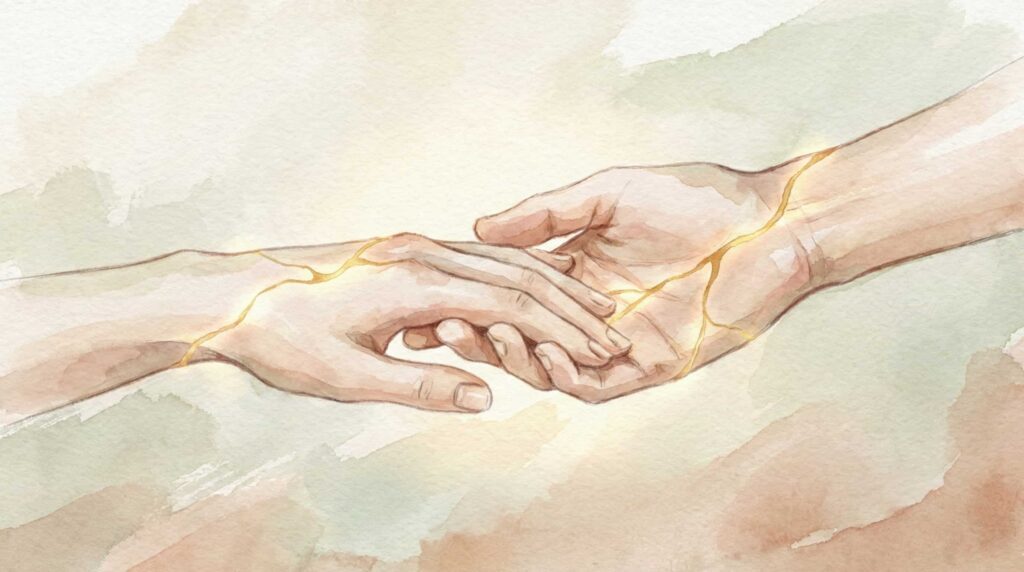
Many couples unknowingly fall into a quiet power struggle where love starts to feel like a transaction.
Imagine Elena and David. When Elena forgets to do the dishes, David experiences it as a personal slight. Instead of addressing the moment directly, he withdraws—becoming cold and distant for days. In his mind, this emotional distance restores “fairness.”
But this scorekeeping doesn’t protect the relationship—it slowly drains it.
When couples see themselves as separate islands, each responsible only for their own happiness, every mistake becomes evidence, every conflict a competition. In this mindset, someone must lose for someone else to win. And when that happens, the relationship itself pays the price.
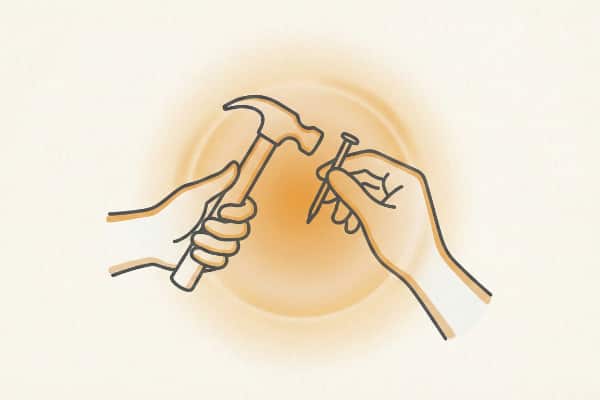
“The cells in our body collaborate with each other without discrimination. One day my left hand was holding a nail and my right hand a hammer… There’s no you, no I, no discrimination; they are one.”
Source: — Thich Nhat Hanh, Reconciliation: Healing the Inner Child, Part One, Chapter 6
The Inspiration: A Simple Story About Interconnection
What Your Body Already Understands
Thich Nhat Hanh offers an image that makes the idea of interbeing immediately accessible—even if you’ve never studied mindfulness or Buddhism.
He describes a moment many of us have lived: one hand holds a nail, the other holds a hammer. In a brief lapse of attention, the hammer hits the finger instead of the nail.
What happens next is instinctive.
The hand holding the hammer drops it and rushes to care for the injured hand. There is no blame. No resentment. No demand for justice. The hands don’t argue about fault—they respond with care.
Why?
Because at a deeper level, the hands know they are not separate. They belong to the same body.

The Practice: Respond as If It Were One Body
Today, when your partner slips up or faces a struggle:
- Pause and notice the urge to correct, withdraw, or punish. Notice your emotional heating — where in your body does it register?
- Visualize your relationship as two hands of the same body — not separate agents in conflict, but collaborators in shared life.
- Respond from interbeing: imagine your partner’s pain as your own. Ask yourself, “If this were my own hand in pain, how would I respond?”
- Choose care over retaliation. Gently take their hand and squeeze it — a tactile anchor for the truth that you do not “inter-exist,” you inter-are.
This is not naivety, but intentional empathy — a practice not of merging identities, but of relational presence that refuses the illusion of separation.
Why This Works: Presence as Nervous System Regulation, Attachment, and Meaning
From Mindfulness Wisdom to Relationship Science
The idea of interbeing may sound philosophical, but it aligns closely with how human nervous systems actually function—especially in intimate relationships.
Mirror Neurons & Emotional Attunement
Our brains are equipped with neural systems often referred to as mirror neurons, which allow us to internally reflect the emotional states of others. This is one reason your partner’s stress can quickly become your own—and why compassion can de-escalate conflict faster than punishment. (Love Your Enemies, Sharon Salzberg & Robert Thurman)
Positivity Resonance & Co-Regulation
When partners meet each other with warmth and responsiveness, their bodies begin to synchronize—heart rhythms, nervous systems, and emotional states align. Psychologist Barbara Fredrickson calls this positivity resonance, describing how shared care literally nourishes both people. (Real Love, Sharon Salzberg)
Oxytocin and Relational Safety
Micro-moments of touch, kindness, and attunement stimulate oxytocin, a hormone linked to trust, bonding, and reduced threat response. This biochemical shift helps move couples out of fight-or-flight and into collaboration. (Real Love, Sharon Salzberg)
Connection and Longevity
High-quality relationships are one of the strongest predictors of long-term health and longevity—outperforming many individual lifestyle factors.(Real Love, Sharon Salzberg)
From a modern therapy lens, this aligns with relational ethics: healthy partnerships are not “50/50,” but 100/100. Each person takes responsibility for protecting the shared emotional ecosystem, not keeping a ledger of debts.
This daily practice is for couples who want something steady and human to return to. Drawing from mindfulness, Buddhist teachings, modern therapy, and science, it offers one small practice each day to support presence, emotional safety, and connection over time. I hope you find it useful. Enjoy!!!