
I recently came across an Instagram post by Lelo that stopped me mid-scroll—in bold lettering it mentioned a “non-negotiable date with yourself.” As a certified sex and relationship therapist who works with all types of individuals navigating modern intimacy and wellness, I see this concept resonating deeply. We’re living in an era where we can be reached at any moment, where our attention is constantly being pulled in seventeen directions, and where saying “I need to be alone” can still feel like admitting defeat.
My stance on this, intentional solitude isn’t loneliness. It’s not giving up. And it’s certainly not antisocial.
Intentional solitude is the active, conscious choice to be alone. It means to disconnect temporarily from the demands of others so you can reconnect with yourself. While loneliness is a state of distress caused by a lack of connection, intentional solitude is a state of restoration that comes from choosing, on purpose, to step away from the noise. Recent research shows that even individuals who experience loneliness can benefit from positively reframing solitude, resulting in improved emotional experiences during time spent alone.
And yes, this includes reclaiming pleasure, all forms of it. Whether that’s taking yourself out for a solo dinner, spending Sunday morning in bed with a good book, or enjoying your own body without apology or shame. In a culture that has historically pathologized both solitude and self-pleasure, claiming time and space for yourself is radical. It’s also incredibly healthy
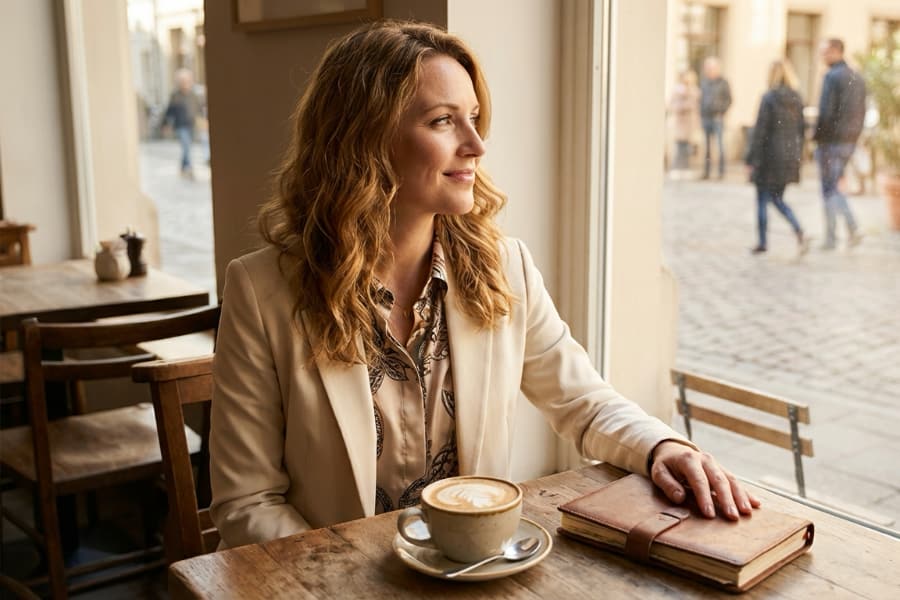
Why Intentional Solitude Matters Now (Especially for Bosses)
If you’re reading this, chances are you’re someone who excels at meeting expectations, yours and everyone else’s. You’re probably highly high achieving, successful in your field, and accustomed to being “on” most of the time. You might also be exhausted in ways you can’t quite name.
We’re navigating what I call the “always available” trap. Because we can be reached 24/7, we often feel we must be available 24/7. The result? We’re burnt out, disconnected from our own needs and desires, and sometimes unsure of who we are when no one’s watching.
Enter the cultural shift happening right now. Modern wellness culture has given us new language and permission structures for what was once considered weird or sad: being alone on purpose, and actually enjoying it. Let me walk you through some of the trends that are reshaping how we think about solitude and why they matter for your mental, emotional, and yes, sexual wellbeing.
The Solo Date Revolution: "Masterdating" and Sexual Self-Care
This is the most direct translation of the “non-negotiable date with yourself.” The masterdating concept, which has garnered millions of views on TikTok, involves taking yourself out with the same level of intention and ceremony you’d apply to a romantic partner. You dress up. You put the phone away. You treat the time as an event worth honoring.
The term itself is a playful blend of “dating” and “masturbating,” emphasizing that this practice is about solo pleasure and self-care. And before you roll your eyes at the wordplay, consider what it’s actually doing: it’s reframing self-directed pleasure and attention as something positive, even desirable.
Historically, eating alone in a restaurant was viewed as pitiable, a sign that something was wrong in your life. And now? It’s increasingly viewed as a confidence power move, signaling comfort in your own skin without needing a buffer to exist in public. This cultural shift is significant for those of us who work in sex and relationship therapy. When you can be alone with yourself rather than merely by yourself, you’re practicing a fundamental skill: the ability to provide your own companionship, validation, and yes, pleasure.
Why this matters for sexual wellness: If you can’t spend an evening with yourself, how comfortable are you really with your own desires? Masterdating builds the same muscle memory that healthy sexuality requires—knowing what you want, asking for it (even from yourself), and believing you deserve it. Research confirms that women who use self-pleasure practices report easier and more frequent orgasms, improved sleep quality, and better mood regulation.
The Artist Date: Creative Solitude as Foreplay for Life
This concept comes from Julia Cameron’s influential 1992 book The Artist’s Way, which has sold over five million copies and continues to resonate with creative individuals seeking to unblock their potential. Cameron describes the Artist Date as a dedicated block of time to nurture your inner artist through a once-weekly solo expedition, strictly solitary, no friends, spouses, or children allowed.
Unlike the Solo Date, which can be about relaxation or confidence-building, the Artist Date has a specific purpose: filling your creative well. It’s designed to spark inspiration and reconnect you with your own curiosity before external noise drowns it out. Studies on solitude show that individuals experience enhanced quality in solitary activities when they actively choose them, compared to activities that are not self-selected.
In my practice, I often see couples who have become so enmeshed in each other’s lives that they’ve lost touch with their individual sources of vitality. When someone comes to me saying “I don’t know who I am anymore,” this is often part of the prescription: regular solo expeditions into whatever lights you up, no explanations necessary.

The connection to pleasure and intimacy: Creativity and sexuality share similar pathways in the brain. Both require a willingness to explore, to be curious, to risk looking foolish. The Artist Date is permission to follow your own interest without justifying it to anyone—a practice that translates beautifully into the bedroom and into all aspects of intimate connection.
Main Character Energy: Romanticizing Your Own Life
These terms describe the practice of viewing your life through a cinematic lens, where you are the protagonist rather than a supporting character in someone else’s story. The trend exploded on social media in 2020 and has become widely used to describe an attractive air of self-assurance.
The connection to solitude? Intentional solitude is peak “Main Character Energy.” Think about it: in movies, the montage of the protagonist walking through the city alone, reading in a park, or cooking a complex meal in solitude is often where character growth happens. By stepping into solitude, you’re centering your own narrative rather than constantly reacting to notifications or obligations.
This isn’t narcissism, it’s self-authorship. And for high-achieving individuals who spend much of their time serving others’ needs (clients, partners, children, aging parents), it can be revolutionary to ask: what would the main character do right now? What does she want?
The sex-positive angle: Main Character Energy in your sex life means treating your pleasure as the plot, not the subplot. It means believing that your orgasm matters, that your boundaries deserve respect, and that your desires are worthy of exploration, alone or with others. It’s about being the author of your own pleasure narrative.
Protecting Your Social Battery: Energy as a Finite Resource
This metaphor has become standard vocabulary, particularly among younger generations trying to articulate their energy levels. The concept treats social energy as a finite resource that is depleted by interaction and recharged by solitude.
The cultural shift here is huge. Previously, needing to be alone might have been labeled “antisocial” or “moody.” Now, saying “my social battery is drained” is a socially acceptable boundary that mental health professionals recognize and validate.
Intentional solitude, in this framework, is the charger for your depleted social battery.
Why this matters for relationships and intimacy: Understanding that connection requires energy (and that energy must be replenished) is fundamental to sustainable intimacy. You can’t pour from an empty cup, as the saying goes. And recognizing when your cup needs refilling isn’t selfish; it’s self-awareness. Partners who understand this concept can support each other’s need for alone time without taking it personally.
The Science Behind the Trend: Why We're Hungry for This

We’re living in the age of hyper-connectivity. Because we can be reached 24/7, we often feel we must be available 24/7. The wellness tourism industry is projected to grow significantly in 2025, driven largely by consumers seeking “intentional disconnection” and calm spaces away from everyday stressors.
Here’s what I tell my clients: the quality of your relationship with yourself sets the ceiling for the quality of all your other relationships. If you can’t spend an evening in your own company, if you need constant external validation, if you’re uncomfortable with your own thoughts and desires, that will show up everywhere. In your partnerships. In your sex life. In your work.
But when you can genuinely enjoy your own company? When you know what you want and can ask for it? When you can sit with yourself in stillness or pleasure without needing to immediately share it on social media? That’s power. That’s freedom.
And that includes sexual autonomy. Learning to pleasure yourself, both literally and metaphorically, isn’t just about orgasms (though those are lovely). It’s about knowing your body, honoring your desires, and recognizing that you are worthy of pleasure for its own sake, not as a performance for someone else.
Your Sex-Positive Masterdate Blueprint: A Practical Example
So what does a truly nourishing, pleasure-centered solo date actually look like? Let me walk you through an example that honors your whole self, mind, body, and yes, your sexual wellness.
Setting the Stage (6:00 PM)
Begin by creating sacred space in your home. This isn’t about perfection—it’s about intention.
Atmosphere:
- Dim the overhead lights and light candles or use soft, warm lighting to create a soothing environment
- Put your phone on Do Not Disturb (or better yet, in another room)
- Play calming music or nature sounds. Consider instrumental jazz, ambient soundscapes, or binaural beats for relaxation, or anything that gets you in a chill mood
Products to enhance your space:
- Candles: Diptyque Baies Candles create ambiance while doubling as a sensual enhancement product
- Bath products: Luxury bath soaks like Bathorium Milk Mineral Bath Soaks, or The Midwest Sea Salt Company – Pure Epsom Salt Soaking Solution provide spa-quality therapeutic experiences at home
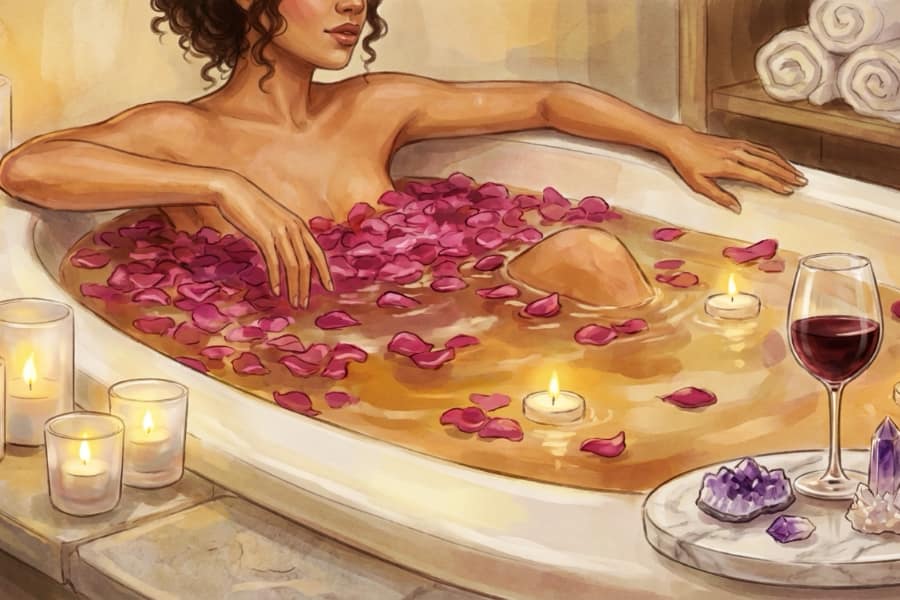
The Ritual Bath (6:30 PM)
Draw yourself a warm (not hot) bath. This is where the magic begins.
What to add:
- High-quality bath salts or bath oils rich in shea butter, coconut oil, or essential fatty acids for deep hydration
- A few drops of essential oils, maybe lavender for relaxation, ylang ylang for sensuality, or eucalyptus for mental clarity
While soaking (20-30 minutes):
- Practice body scanning. Notice your body sensations without judgment
- Set an intention for your evening: an affirmation, a commitment to yourself, or simply permission to be present
- Allow yourself to simply be without productive purpose
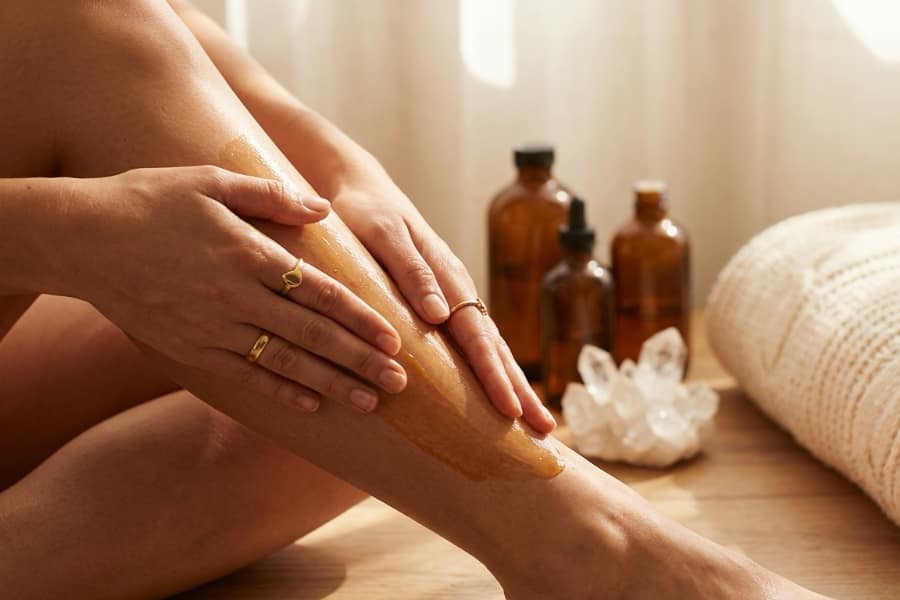
Sensory Nourishment (7:15 PM)
After your bath, the ritual continues.
Body care:
- Pat skin dry gently and apply a luxurious body butter or oil while skin is still slightly damp to lock in moisture
- Take your time with this and make it a meditation on touch and self-love
Dress (or undress) for pleasure:
- Slip into whatever makes you feel amazing, possibly silk pajamas, a luxurious robe, or nothing at all
- The goal is comfort meeting sensuality
The Pleasure Menu (7:30 PM - 9:00 PM)
Now comes the part where you honor your desires completely. This is your menu, choose what calls to you.
Option 1: Sensual Solo Dining
- Prepare or order something delicious that you genuinely crave
- Set the table using the good dishes, cloth napkins, flowers
- Eat slowly, mindfully, savoring every bite
- Pair with your beverage of choice (wine, tea, sparkling water with herbs)
Option 2: Creative Expression
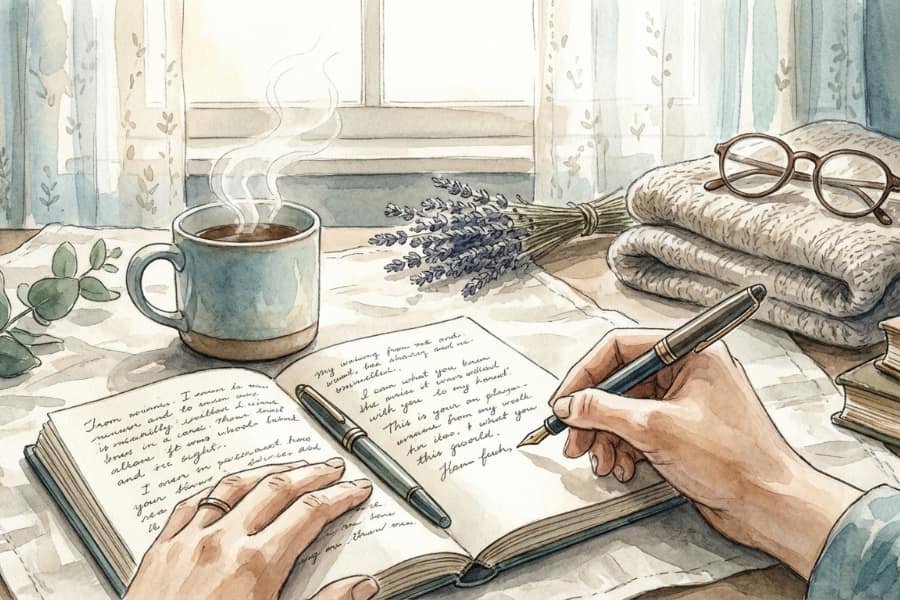
- Journal about your desires, dreams, and what brings you joy
- Create art, write poetry, or dance to music you love
Allow yourself to be messy, imperfect, exploratory
Option 3: Sexual Self-Care
- This is your invitation to pleasure without agenda or pressure
- Consider incorporating body-safe, high-quality pleasure products
- Use a quality lubricant or arousal gel with natural aphrodisiacs like Foria’s Awaken Oil or pleasure-enhancing formulas with warming/cooling sensations
- Focus on what feels good, not on outcome
- Explore your body with curiosity and kindness
Products for sexual wellness:
- For exploration: LELO luxury vibrators with long warranties and body-safe construction
- For arousal: Foria’s plant-based arousal oils and intimacy products trusted by physicians
- For comfort: LOLA’s hypoallergenic, gynecologist-approved intimate care products
Integration & Rest (9:00 PM)
Close your masterdate with gentleness.
- Journal briefly about your experience. What did you notice? What felt good?
- Sip herbal tea (chamomile, lavender, or passionflower for continued relaxation)
- Get into bed early with a book or simply rest
- Notice how your body feels. I imagine it’s probably more relaxed, alive, and connected to yourself
Making It Your Own: The Invitation
Your non-negotiable date with yourself doesn’t have to look like mine. Maybe yours involves hiking alone at dawn, cooking an elaborate meal just for you, spending three hours in a bookstore, or dancing naked in your living room. The specifics don’t matter.
What matters is this: when was the last time you spent intentional time alone, not because you had to, but because you chose to? Not mindlessly scrolling or catching up on work, but genuinely being present with yourself, with your thoughts, your body, your desires?
If you can’t remember, that might be your answer. The invitation is there. Take yourself out. Fill your creative well. Be your own main character. Let your social battery recharge. Honor your pleasure.
Your relationship with yourself is the longest one you’ll ever have. It deserves at least as much attention, care, and yes, pleasure as you give to everyone else.
Ready to Explore Deeper?
If you’re curious about exploring your relationship with solitude, pleasure, and intimacy in a therapeutic setting, I’d be honored to work with you. Sometimes we all need a guide as we navigate these territorie, someone who can hold space for both the joy and the discomfort of truly getting to know ourselves.
As a certified sex and relationship therapist, I work with individuals who are ready to reclaim their relationship with pleasure, set boundaries without guilt, and develop the kind of self-awareness that transforms not just their intimate lives, but every aspect of their existence.
The work we do together might include:
- Understanding your attachment patterns and how they show up in solitude
- Healing shame around pleasure and sexual self-expression
- Learning to set boundaries that protect your energy and autonomy
- Exploring the connection between creativity, pleasure, and vitality
- Developing practices for sustainable intimacy (with yourself and others)
You don’t have to figure this out alone. Sometimes the most radical act of self-care is asking for support.
Ready to begin? Contact me to schedule a consultation and let’s explore what intentional solitude and pleasure-centered living could look like for you.