
Let’s set the scene. It’s 10:30 PM. The emails are sent, the kids are (finally) asleep, the dishwasher is humming, and you are horizontal.
Your partner reaches over. Maybe it’s a hand on the hip, or that specific “I’m interested” kind of kiss. But instead of fireworks, your brain (which is currently running a diagnostic on tomorrow’s schedule) goes, “Okay. I guess we’re doing this. Let’s start the engine.”
There is friction. There is an attempt to manufacture arousal. And often, there is a lingering sense that sex has become just another item on the to-do list, somewhere between “buy almond milk” and “renew car insurance.”
If this resonates, you aren’t broken, and your relationship isn’t doomed. You are simply operating with an outdated manual. We need to talk about the lost art of simmering, and why treating foreplay as a “warm-up lap” is extinguishing your spark.

The "Foreplay" Trap
To understand why our bedrooms feel lackluster, we have to look at our vocabulary. The word “foreplay” is actually kind of a scam.
It linguistically implies that the touching, kissing, and oral connection is merely the appetizer, the stuff you have to get through to arrive at the “Main Event” (penetration).
This is a historical hangover where we prioritized linear, male-pattern arousal over female pleasure. As Dr. Laurie Mintz argues in her fantastic book [A Tired Woman’s Guide to Passionate Sex], if we actually prioritized the female orgasm (which usually requires clitoral stimulation), we’d probably call that “sex” and refer to intercourse as “post-play.”
By viewing foreplay as just the mechanical steps required to lubricate the machinery, we turn a creative, erotic experience into a chore.
You Are Not a Lawnmower
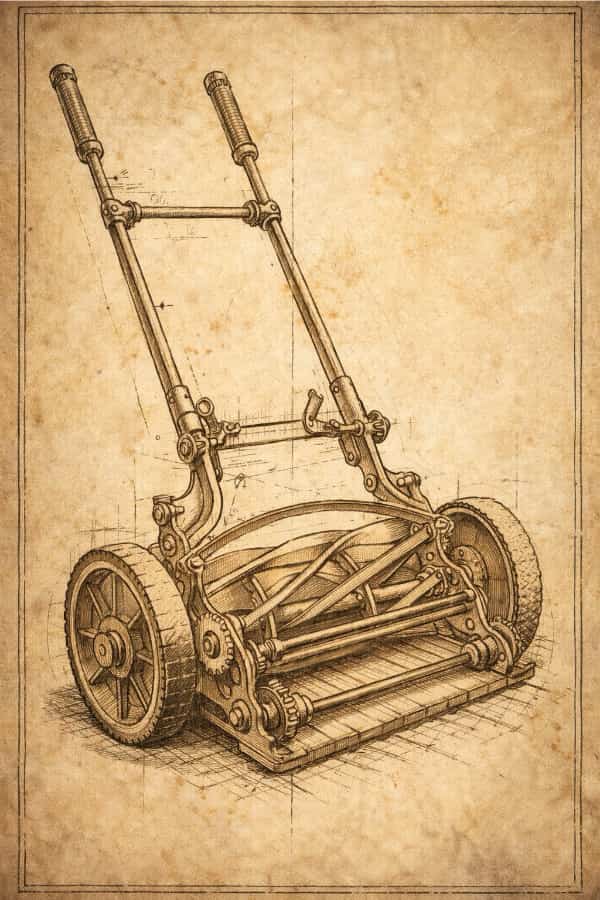
Dr. Stephen Snyder, a renowned sex therapist and author of [Love Worth Making], has a metaphor that I use constantly in my practice: Your partner is not a lawnmower.
You cannot walk up to a cold engine, yank the pull-cord (provide friction), and expect it to roar to life immediately. Trying to convert a body that is in “neutral” or “off” directly into “high gear” through friction alone is the quickest way to bad, disconnective sex.
Enter: The Science of "Simmering"
If we aren’t pulling the lawnmower cord at 10:30 PM, what should we be doing? We should be simmering.
Dr. Snyder describes simmering as the practice of cultivating low-stakes arousal. It’s about getting turned on together for no reason at all other than it feels good. It’s the lingering kiss in the kitchen or the way you look at them when they’re dressed up. It’s connection without the contract.
The Golden Rule of Simmering: It is not the same as cuddling.
Cuddling is lovely; it returns us to safety and comfort. But simmering is erotic. It keeps the tension alive. It’s the difference between a hug that says, “I support you,” and a touch that says, “I want you.”
Recommended Books for Reading

Magnificent Sex: Lessons from Extraordinary Lovers by Peggy J. Kleinplatz
Instead of focusing on “dysfunction,” it studies older couples who have better sex with age, focusing on presence, embodiment, and connection rather than just mechanics.
Not “Just Friends”: Rebuilding Trust and Recovering Your Sanity After Infidelity by Shirley P. Glass
Provides the structural “walls and windows” concept that is crucial for explaining safe boundaries in your content.
Mating in Captivity by Esther Perel
Excellent for explaining why “closeness” sometimes kills desire and how to cultivate “erotic distance.”
The "Kitchen Grope" Dilemma (A Case Study)
Let’s look at a fictional couple, Mark and Elena. They represent a dynamic I see in my office almost every week.
Mark misses the spark. In an attempt to reconnect, he comes up behind Elena while she is washing dishes and gropes her breasts or presses his hips into her.
- Elena recoils. She’s annoyed. “He only touches me when he wants sex, and I’m busy.”
- Mark feels rejected. “I’m just trying to show her I’m attracted to her.”
Later, in bed, Mark rushes to manual stimulation to “get her ready.” Elena feels like he’s checking a box, and she feels pressured to hurry up and get wet so he doesn’t feel bad.
What is actually happening here?
- The Lawnmower Effect: Mark is trying to start the engine with friction while Elena’s brain is still in “Task Mode.”
- The “Foreplay” Trap: Elena associates that specific touch with a demand for intercourse. Her body hits the brakes because she is tired.
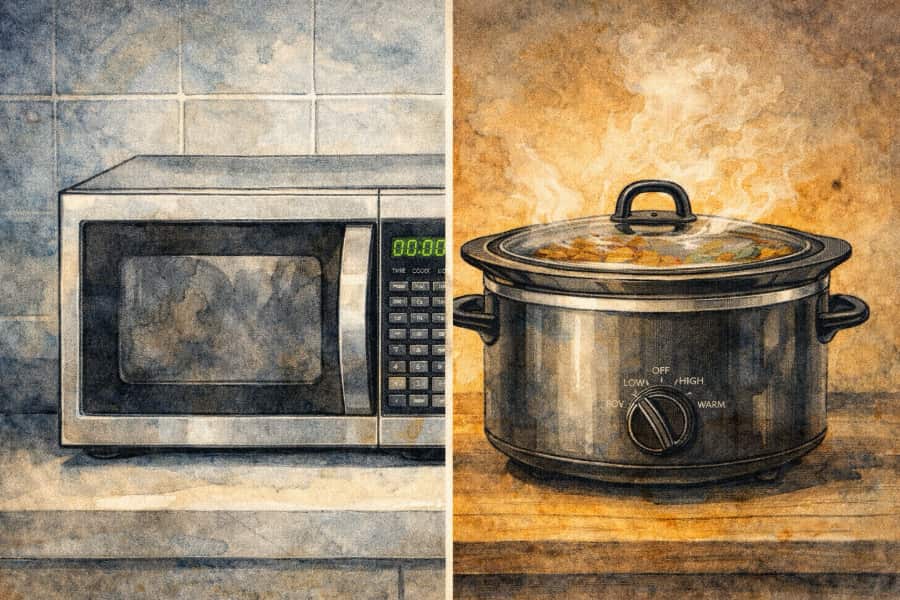
- Microwaves vs. Crockpots: Mark is treating Elena like a microwave (push button, get heat). But as Dr. Mintz notes, many women are crockpots—they need time and low heat to warm up.
Context is King (and Queen)
Modern science, particularly the work of Dr. Emily Nagoski in her essential book [Come As You Are], tells us that desire doesn’t always strike like lightning.
We often confuse Spontaneous Desire (craving sex out of the blue) with Responsive Desire (feeling desire only afterpleasure has begun). For many people in long-term relationships, desire is responsive. You show up, you engage, and then your body wakes up.
Simmering is the bridge. It keeps the pilot light on so you aren’t trying to boil a pot of water from freezing cold every single time.
How to Fix It: Turn Down the Pressure
How do Mark and Elena (and you) fix this? By separating arousal from expectation.
- Touch Without Strings
Mark needs to learn what Dr. Mintz calls “No-End-Goal Touching.” This is touching that feels erotic but carries an explicit promise: This will not lead to intercourse right now. If Elena knows she doesn’t have to perform or “finish,” she can actually relax into the sensation.
- The Napkin Trick
Instead of the “kitchen grope,” which feels like a demand, try subtle, provocative play. Maybe it’s a text during the workday about a specific memory. maybe it’s playing footsie under the table at dinner, or “accidentally” grazing a hand against a thigh. This builds the simmer (the anticipation) without the pressure of the bedroom.
- Get Out of Your Head
When you are intimate, you need to move out of your To-Do list and into your body. Dr. Lori Brotto’s research in [Better Sex Through Mindfulness] highlights how mindfulness, paying non-judgmental attention to the sensation of the moment, is critical. Stop “spectatoring” (watching yourself to see if you’re aroused yet) and focus entirely on the texture of your partner’s skin or the temperature of their hand.

Your Homework for the Week
If you want to shift the dynamic, here is your assignment. It’s simple, but it requires intention.
- The Morning Simmer: Instead of a peck on the cheek, hold your partner for thirty seconds before you leave. Inhale their scent. Press your body against theirs. Then, leave. Do not escalate. Just let the energy hang there.
- Redefine “Sex”: Have a conversation where you agree that oral, manual, and toys are sex, not just the warm-up. Relieving the pressure to always have intercourse can ironically be a massive libido booster.
- Prioritize Pleasure, Not Desire: As Dr. Emily Nagoski argues in her later work, [Come Together], stop waiting to feel “horny.” Focus on pleasure as the metric of success. If you create a context where pleasure is easy to access, desire usually follows.
Great sex in a long-term relationship isn’t about maintaining the breathless panic of the first three months of dating. It’s about cultivating a connection where your sexual self feels safe, seen, and invited to come out and play.
If you recognize yourself in Mark and Elena’s dynamic and want to untangle those knots, I’m currently opening up spots for consultation. Let’s talk.
Games and Other Toys to Get You in the Mood

Designed to spark honest conversation and deepen connection, this deck gives couples an easy, meaningful way to explore intimacy, curiosity, and understanding together, without pressure or awkwardness.
Uberlube Premium Silicone Lube
Überlube is a must-have because it’s long-lasting, clean, and body-safe, designed to enhance comfort and pleasure without stickiness or irritation. It makes intimacy feel smoother, more effortless, and more enjoyable, letting couples stay present instead of distracted.